

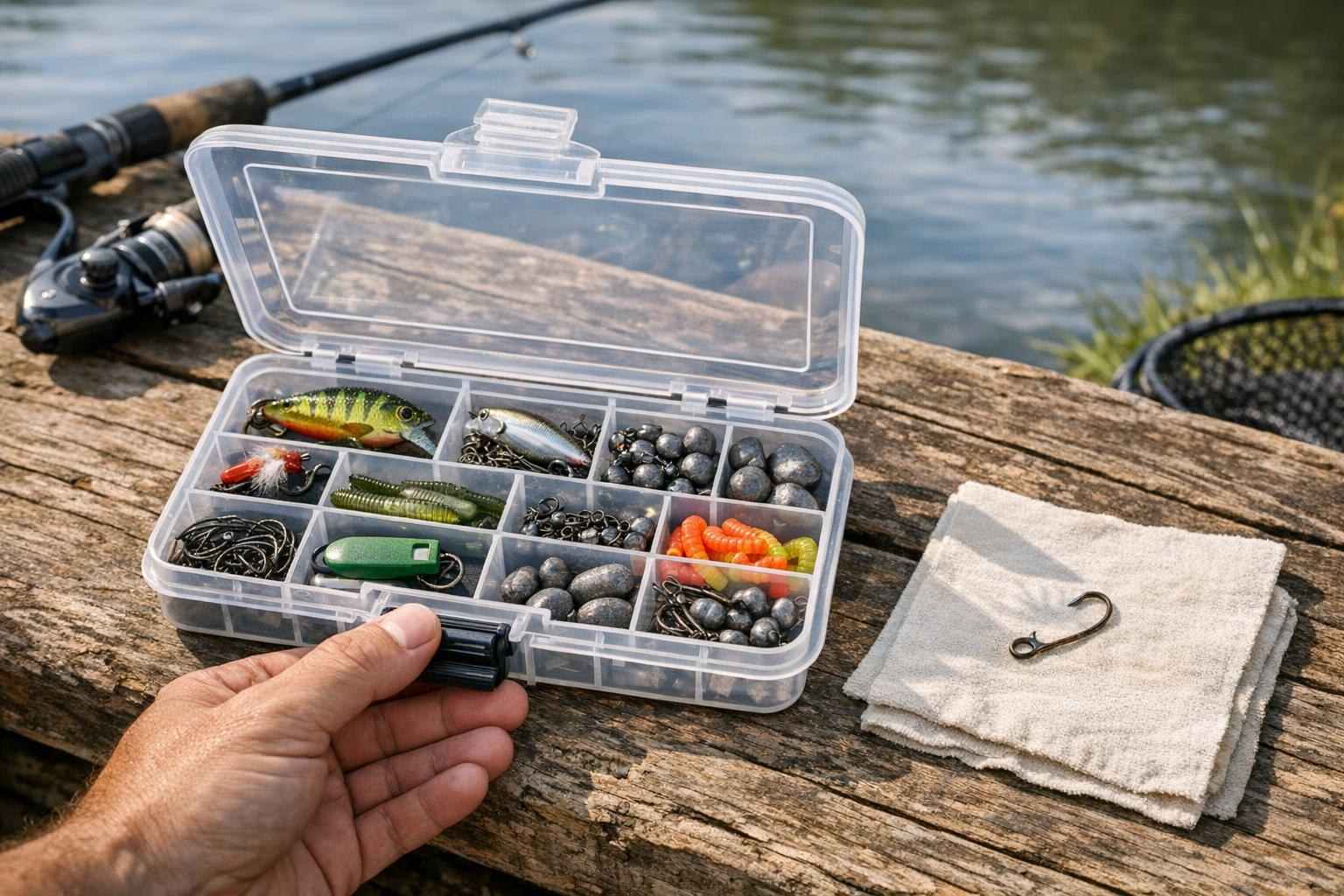
As with anything in life, if you restrict yourself to short sessions then restraint in terms of tackle choice is the name of the game. The weight and clutter of carrying every single lure plus spare parts for them can quickly lead to damage, whereas not carrying enough to replace lost hooks or to make up a change to a different type of fishing tackle can end a very useful session on the bank.
Start with the session, not the container
So start off by listing the activities your tackle box will be used for, such as changing tackle for different fish species, carrying live bait, tackle for fishing through weedy and snagged up areas, and walking long distances to reach a fishing location. Once you have a list of activities then choose a small tackle box that will suit your needs. The box should have a few separate compartments, this will stop lures getting mixed up with hooks etc. The tackle should be easy to see and be able to be pulled out quickly.
Determine what you need the tackle box to do for you on the bank, write down all the jobs that it will have to perform, (e.g. changing lures frequently, having live bait, fishing through weeds), then determine what type of container you need to carry your tackle in based on your fishing style and the amount of tackle that you need to carry.
If you can't tell what purpose most of the items in your tackle box serve, then it is simply holding excess tackle and not much good for anything else.
Choose compartments that prevent small failures
Compartments in a small tackle box are only useful if they can hold different sorts of tackle in separate areas that can be clearly identified. Dividers that can be adjusted to different sizes of lures are generally no good as they can shift about while you are traveling with your tackle and cause hooks and weights to get lost in the box.
A lid which does not close properly is a major problem, the hinge may break and the latch split. Any such defect with your box must be sorted before you go fishing. A warped rim will not fit into your rucksack and could cause damage to other items. Most importantly a box that opens up in your rucksack can scatter all your sharp hooks and cause great damage to your other tackle.
Sharp items such as hooks and other sharp lures must not be placed in too shallow a compartment. Points could pierce the lid of the tackle box and cause damage to the lure. This type of damage is easily avoidable by placing such items in deeper compartments of your tackle storage.
Match the box to bank access
Most of us carry more to the bank than we think for. A small box is great at home but in a backpack with a rod, net, water, etc. it can soon become a problem. Choose a box that is going to sit ok in your small pack or is easy to carry in your hand.
A clear or partly transparent lid to a container is better than a solid one for quick identification of tackle. However, even the best organized tackle will contain missing hooks or suffer damage in some way from time to time. A color or label system can mean that items are kept in specific areas of the container – e.g. terminal tackle, lures, tackle repair.
Moisture on the bank is a big problem. Damp hands, damp grass, wet trips to the water's edge, even occasional splashes in the water can penetrate to the box and cause problems. A good seal is important, but it's not a substitute for good tackle cleaning and drying before it's put away in the tackle box. If you notice water beading inside the tackle box lid, or signs of corrosion on metal components, it's time to sort the tackle box out.
Build a useful load for short sessions
It's worth remembering that a practical load is based upon an understanding of the type of fishing you will be doing and a brief consideration of what could go wrong. For short sessions a small selection of specialist lures to match local conditions, plus the basics such as terminal tackle, line runners, a net and so on are sufficient. Don't carry unnecessary items.
Tackle organization is improved when each item of tackle is put away in a specific location or 'home'. This means that replacement hooks for example are stored away from soft plastics that may be dampened and so come into contact with the hooks and potentially cause damage.
The bigger problem is that most anglers have far more lures than they actually use. And they have loads of duplicate terminal tackle, but no spares for basic repairs to hooks, swivels, line etc. Therefore, it makes sense to organize your tackle to make the most of what you have.
Check for rust, residue, and damaged parts
When you get home to your own place, take every piece of tackle out of your box and give it a once over for any sign of rust or damage. Look for any signs of orange rust spotting, dull surfaces, sticky residues, or even just signs of wear and tear. Check split rings, swivels, hook snaps and even weights. If any of them look or feel even slightly damaged, then chuck them in a separate pile and get them replaced as soon as possible.
There's nothing worse than finding out that rust has formed on one or more hooks, for example. Yes, it's unsightly and it can be a great confidence breaker, however it also means that, whilst the item may still function, it's not performing at 100% and, when the item is used, it can start to deteriorate even more. It's better to store such items in a separate container and to eventually replace them with new ones.
Clean any dirt from the storage compartments and let the box and contents dry. Also check the hinge and the latch for any grit that may have accumulated. If the lid does not seal equally any more or if the box smells damp after having been dried, then you need to find the cause for this problem instead of storing even more tackle in it.
Know when compact equipment has become too small
As your small tackle box fills with tackle, the space starts to cause you problems. All your hooks are in different compartments, you cannot find what you need, you are forced to carry loose items in your pockets. These are the problems of a small tackle box that has become too small.
Perhaps you just need a slightly larger organizer or another purpose-specific tackle box to carry even more of your compact tackle. But remember, first you must clear out all the damaged, duplicate or hardly ever used items and see just how much you really do need to carry for your type of fishing.
If when you pack your small tackle box for your next short fishing session pieces are to move about in it when you go to use it, the lid to open and shut the box is to become stuck or cannot be opened, and the items in the box cannot be seen and therefore cannot be found when required, then obviously the items must be packed in a different manner.
Keep the setup ready without overpacking
The best small tackle box is not necessarily the one with the most spaces for different types of tackle. The best box is one which protects a selection of tackle of which you have been sure to choose well, brings problems to light, and can be checked for necessary items without having to unpack your whole fishing tackle.
Before heading off on short fishing sessions check the box's lid for good closure. Look for signs of moisture penetration. Check you have got the necessary terminal tackle for the planned method. Remove any tackle that shows signs of deterioration. On return from fishing sessions dry out any tackle that got wet and put it back in its appropriate place.